
Who Is Responsible for Checking Mezuzahs in Shared Buildings?
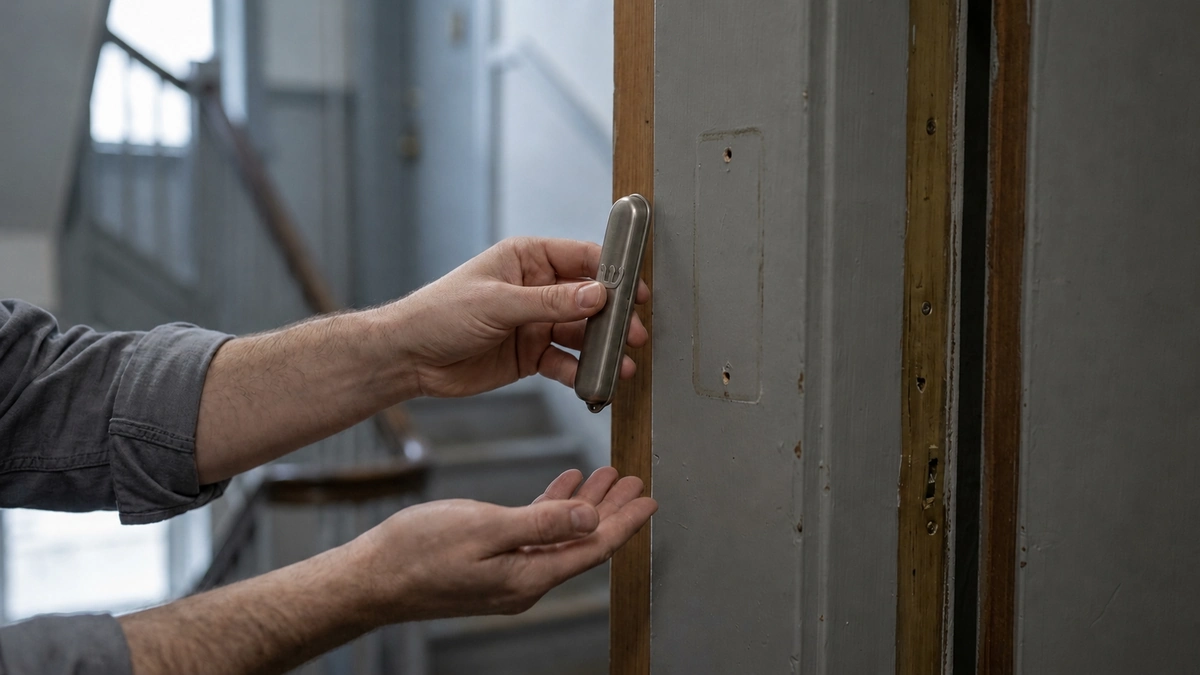
Shared buildings raise a question that comes up more than you might think: when a stairwell, lobby, or hallway needs a mezuzah checked, who actually has to do it? Many residents assume someone else is taking care of it. Often, no one is. Understanding shared building mezuzah maintenance is not just a matter of good neighbor relations, it is a genuine halachic responsibility that falls on specific people in specific ways. This article will walk you through who is obligated, how costs are shared, and what the halacha says about common spaces so that the mitzvah is fulfilled properly in your building.
Key Takeaways
- Shared building mezuzah maintenance is a joint halachic responsibility of all tenants who use common spaces, not the building management or any single resident.
- Stairwells, lobbies, and shared hallways are obligated in a mezuzah because they function as a passageway to dwellings and must maintain basic dignity for human use.
- Stairwell and lobby mezuzahs in shared buildings are treated as an individual's (yachid) mezuzah and checked twice every seven years, the same schedule as a private home, regardless of how many tenants share the building; the more lenient twice-in-fifty-years schedule applies only to genuinely public spaces like city gates.
- Costs for shared building mezuzah maintenance must be split equally among residents, and unwilling residents can be compelled through beit din to pay their share if others affix the mezuzah first.
- Neglecting to check shared mezuzahs or assuming someone else has done so is a common mistake; regular inspection is especially critical in damp or high-traffic stairwells prone to damage.
- A kosher mezuzah in shared spaces sanctifies the entrance and extends spiritual protection to every household and resident who passes through the building.
Who Is Responsible for Checking Mezuzahs in Shared Buildings?
Shared building mezuzah maintenance is the joint responsibility of all residents who benefit from and use the shared spaces. This means that every tenant in an apartment building shares an obligation to ensure that mezuzahs in stairwells, lobbies, and common hallways are properly affixed and periodically checked. If you are unsure whether your building's shared mezuzahs have been checked or are even kosher, please reach out to Kosher Mezuzah, we are glad to help you assess what is needed.
The Halachic Basis: Common Areas Are Obligated
The foundational question is whether shared spaces in a building, stairwells, entrance hallways, lobbies, require a mezuzah at all. The answer, based on the halacha as codified in the Shulchan Aruch and its commentators, is yes. The Rambam (Hilchos Mezuzah 6:8) teaches that even multiple houses, one inside the other, are each obligated in a mezuzah. Shared entryways that serve as a passageway into dwellings carry an obligation because they function as a beit sha'ar, a gatehouse, for the residences within. The Gemara in Yoma (11a) makes clear that spaces serving human dwelling, even indirectly, are included in the mitzvah. We cover this in more depth in Who Is Responsible for the Mezuzah at a Building Entrance?.
The Shulchan Aruch rules that a stairwell or corridor shared by multiple tenants in a building is obligated in a mezuzah. The halachic principle at work here is chovat hadar, the obligation rests on whoever dwells in the space. Because all residents use the stairwell and entrance, all residents share the obligation together. For a deeper look at how this responsibility applies specifically at a building's main entrance, see our guide on building entrance mezuzah responsibility. This is not merely a communal courtesy: it is a binding halachic duty that each individual resident carries.
It is important to note that spaces which lack kevod, the basic dignity suitable for human use, are generally exempt. A bathroom, a mikvah changing room used solely for that purpose, or a tannery are exempt because the halacha describes the obligation as applying to a "dwelling of honor" (Gemara Yoma 11b). Common stairwells and building lobbies, however, are dignified spaces for human passage and clearly fall within the obligation.
How Checking Works in Shared Spaces
The Shulchan Aruch (Yoreh De'ah, Siman 291) distinguishes between a private mezuzah and a public one. A private mezuzah, meaning one belonging to an individual household, must be checked twice in every seven-year shemittah cycle. A public mezuzah, one shared by many people, is checked twice in fifty years, corresponding to the Yovel (Jubilee) cycle. The Gemara's reasoning, as explained by Rashi, is that we do not want to place an excessive burden on the public for communal matters.
For shared building mezuzahs, most poskim (halachic decisors) treat stairwell and lobby mezuzahs as an individual's mezuzah, not a public one. The Aruch HaShulchan (Yoreh De'ah 291:1) rules that mezuzahs of private homes are called an individual's mezuzah even when many people live there, so the checking cycle stays at twice every seven years, the same as a private home. The more lenient public schedule is reserved for spaces that serve the community at large, like city gates and courtyards, not for apartment stairwells and lobbies no matter how many tenants share them. This is consistent with the Chatam Sofer's ruling that a house owned by multiple partners is checked on the private schedule. When in doubt about which standard applies to your building, consult your rav.
Checking a mezuzah does not require a specialized sofer (scribe). According to the poskim, any knowledgeable person can inspect a mezuzah scroll to determine whether letters have faded or cracked. That said, a proper examination, especially one that verifies the integrity of the ksav (handwriting), the klaf (parchment), and the dio (ink), is best performed by a trained magiah (halachic mezuzah examiner). At Kosher Mezuzah, every scroll is examined by a trained magiah before it reaches your doorpost, and we can help arrange checking for existing mezuzahs when needed.
Who Pays, and What Happens When Someone Refuses
The halacha is direct on the question of expense. The Da'at Kedoshim rules that in a building with multiple tenants sharing a stairwell or common space, each tenant must contribute to the cost of the mezuzah. This follows naturally from the principle of chovat hadar, if the obligation belongs to all, so does the cost. One person cannot be left to carry the expense alone for a shared space.
But what if one of the residents refuses to contribute? The Da'at Kedoshim addresses this as well: the willing partner may go ahead and affix the mezuzah, and afterward compel the unwilling partner in a beit din (rabbinical court) to pay his share of the cost. The mitzvah is not held hostage to a neighbor's reluctance. The obligation exists regardless, and the one who acts on it has every right to seek reimbursement. This same cost-sharing logic applies beyond residential buildings. If your shared space is a place of business, our article on shared office mezuzah requirements covers how those obligations are handled in a commercial setting.
A related situation arises when both residents want the zechus (merit) of affixing the mezuzah themselves. The Mikdash Me'at and Kuntres HaMezuzah offer a practical and elegant solution: both partners purchase the mezuzah together, and then one of them affixes it and recites the blessing. This way, the shared ownership gives both residents a meaningful part in the mitzvah, and the blessing is recited in full. If you have questions about your specific building arrangement and want guidance on fulfilling the mitzvah correctly, contact Kosher Mezuzah for support.
A Common Mistake Worth Avoiding
Perhaps the most widespread error in shared buildings is simple neglect, the assumption that someone else has already handled the stairwell mezuzah, or that the building management is responsible. Building management is not halachically obligated: the residents are. Another frequent mistake is affixing a mezuzah in a shared space and then never checking it. Even if the checking cycle for public mezuzahs is long, a scroll exposed to a damp stairwell, fluctuating temperatures, or a building with young children running past can deteriorate faster than expected. The Aruch HaShulchan (Yoreh De'ah 291:1) notes that in places prone to damage or rot, such as damp stairwells, checking should occur more frequently than the standard schedule, at least once a year. Do not wait for the cycle to expire if you have reason to believe a scroll may have been compromised. If your building functions more like communal housing, with shared kitchens, dining areas, or living spaces, the rules can differ in important ways. For the full discussion, read Do Public Buildings Need Mezuzahs? Offices, Hotels, and Schools Explained. Related reading: Do Shared Offices Need a Mezuzah? (Rotating Occupants Explained).
What This Mitzvah Means in a Shared Home
The poskim teach that while the mezuzah brings shemira, divine protection, to the home, the intention of the one performing the mitzvah should be solely to fulfill the command of HaKadosh Baruch Hu. This is especially meaningful in a shared space. When neighbors come together to fulfill this mitzvah jointly, contributing to the cost, arranging the checking, ensuring the scroll is kosher, they are collectively sanctifying the entrance to their building. The mezuzah on a shared doorpost is a reminder that the entire dwelling, and everyone who passes through it, stands under the care of Hashem.
The Rambam (Hilchos Mezuzah 5:4) stressed that a mezuzah is a profound mitzvah of declaring God's unity and love, not a personal amulet for worldly benefit. In a building where many families live, a kosher mezuzah in the common areas extends that sanctification to every household within, transforming a simple passageway into a space dedicated to Hashem.
Key Takeaways
Shared building mezuzah maintenance falls on all tenants who use and benefit from the common space, not on building management or any single resident. Stairwells, lobbies, and shared hallways are halachically obligated in a mezuzah because they serve as a passageway to dwellings. The cost must be shared equally, and if one resident refuses, the others may affix the mezuzah and compel repayment. Shared mezuzahs in apartment buildings are checked on the private schedule, twice every seven years, the same as a private home, no matter how many tenants share the building; only genuinely public spaces like city gates use the more lenient twice-in-fifty-years schedule. Regular checking is especially important in spaces prone to moisture or physical damage.
Fulfilling This Mitzvah with Confidence
At Kosher Mezuzah, every mezuzah scroll we provide is produced under a process endorsed by the OU-endorsed process and examined by a named magiah (halachic mezuzah examiner). We maintain full traceability, from the sofer's (scribe's) quill to your doorpost, so that you can be confident the scroll affixed in your building's stairwell or lobby is genuinely kosher and not simply assumed to be. This matters deeply in shared spaces, where the obligation belongs to everyone and the scroll must meet the standard that every resident can rely upon.
Proper fulfillment of this mitzvah means not only affixing a kosher scroll but ensuring it remains in good condition. We encourage residents in shared buildings to take the initiative, speak with your neighbors, determine when the building's common mezuzahs were last checked, and arrange for a proper inspection if there is any doubt. You can also browse our selection of kosher mezuzah scrolls to ensure your shared spaces are properly covered. The mitzvah of mezuzah is precious, and shared spaces deserve the same care and attention as the doorpost of your own home.
If you have questions about which spaces in your building require a mezuzah, how to coordinate checking among tenants, or where to obtain properly checked kosher scrolls, please contact Kosher Mezuzah. We are here to help you fulfill this mitzvah with the clarity and confidence it deserves. May your home and building be a place of kedushah (holiness), shemira (protection), and Hashem's continual blessing.

.svg)
Bring a true Kosher Mezuzah into your home
Fulfill the mitzvah with confidence, beauty, and meaning.
Buy a Mezuzah