

How Mezuzah Shapes Jewish Space: Sacred Awareness in Every Doorway
The mezuzah is a mitzvah that turns every doorway of a Jewish home into an encounter with Hashem’s Oneness.
The mezuzah shapes Jewish space in a unique and elevated way. When a kosher mezuzah scroll is properly affixed, the way we enter and leave the house is no longer casual. At every passage through the doorway, we meet the words of Shema and are confronted with the unity of Hashem’s Name.
Rambam writes (Hilchot Mezuzah 6:13) that each time a person comes in or goes out, he “encounters the Unity of the Name of the Holy One, blessed is He,” remembers Hashem’s love, wakes up from “the vanities of the time,” and is redirected to what truly endures – “the knowledge of the Rock of the world.” A home with mezuzot on its doors is thus a place where even ordinary movement through the house trains a Jew’s awareness toward Hashem and upright living. See also Entering a Home Without a Mezuzah.
For guidance on choosing a halachically verified mezuzah for your home, you are welcome to reach out to us at Kosher Mezuzah, dedicated to ensuring the proper fulfillment of the mitzvah of mezuzah.
Key Takeaways
- The mezuzah shapes Jewish space by transforming every doorway into an encounter with the Oneness of Hashem.
- A kosher mezuzah scroll must be handwritten by a qualified sofer on kosher parchment; printed scrolls are invalid and cannot fulfill the mitzvah no matter where they are placed
- The obligation to affix a mezuzah extends beyond the front door — bedrooms, storerooms, offices, and other functional spaces throughout the home may all be halachically required
- Halacha requires mezuzos in a private home to be checked twice every seven years - about once every three and a half years - and communal mezuzos twice in fifty years (Yoreh De'ah 291:1); in practice, the scroll is examined for cracked or faded letters, and questions of letter form are brought to a qualified magiah (halachic examiner). A deteriorated or invalid scroll breaks the sacred declaration the mezuzah is meant to maintain
- Placement at the outermost edge of the doorpost is deliberate; Chazal (Menachot 33b) and Shulchan Aruch (Yoreh De’ah 285:2 with Rema) require the mezuzah in the outer tefach so that one encounters it immediately upon entering, and Tur and later authorities explain that this positions the home under Hashem’s guardianship.
- When uncertain about which rooms require a mezuzah or how to handle complex placement situations, consulting a rav ensures every threshold in your home is truly sanctified.
How a Mezuzah Shapes Jewish Space: The Direct Halachic Answer
The mezuzah shapes Jewish space by transforming every doorway into a point of encounter with the Oneness of Hashem. Every kosher mezuzah scroll contains the parshiyos of Shema Yisrael and V'haya Im Shamoa, the foundational declarations of emunah (faith) and acceptance of the yoke of Heaven. When a kosher mezuzah scroll is affixed, the physical structure of the entryway is no longer merely architecture. It is elevated and becomes part of the sanctified reality of the house itself. The mitzvah of mezuzah is the halachic mechanism through which a home or room takes on the character of a Jewish space at the level of its very structure. We cover this in more depth in Touching Mezuzah as Expression of Faith.
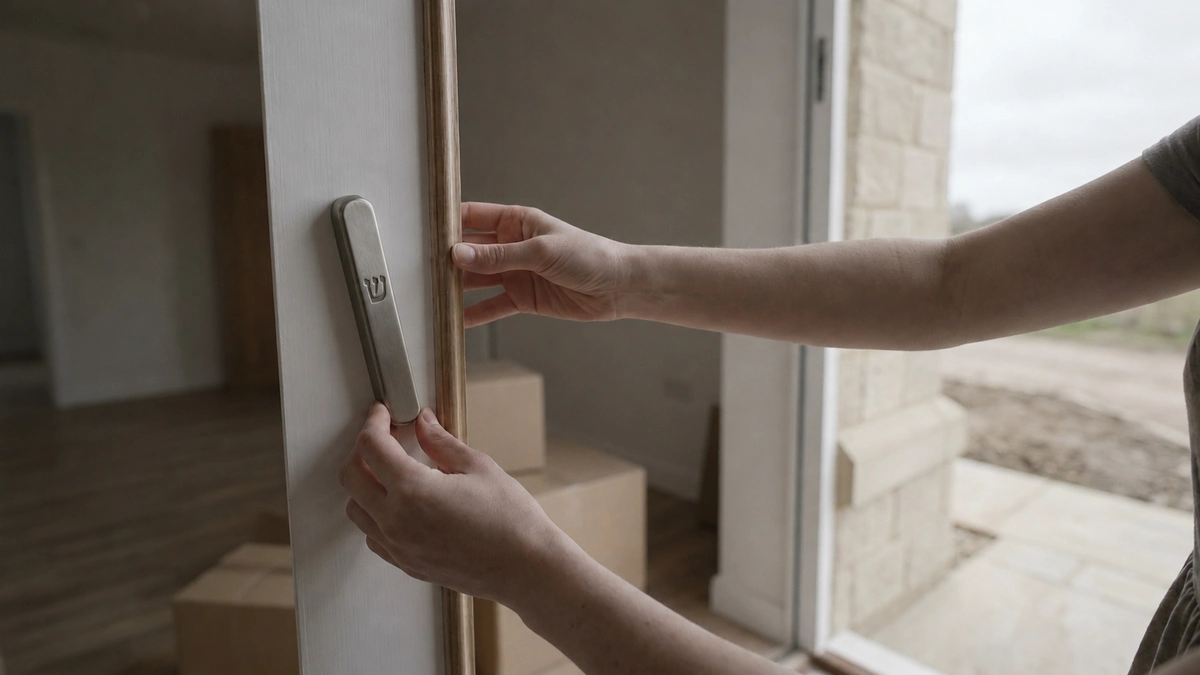
The obligation to affix a mezuzah derives from Devarim 6:9: "And you shall write the words on the doorposts of your house and upon your gates." Chazal teach (see Menachot 33b and Shulchan Aruch Yoreh De’ah 285:2 with Rema) that the mezuzah should be placed in the outer tefach of the doorway, so that one encounters it immediately upon entering. This precise placement means that from the moment a person crosses the threshold, he is entering a space defined by these words of Hashem. The doorway is not only an entrance to a private structure; it becomes the boundary where ordinary space ends and Jewish space, shaped by the words of the Torah, begins.
What the Tur, Rambam, and Halachic Authorities Establish About the Doorpost
Chazal describe this through the well-known mashal in Avodah Zarah (11a), cited by the Tur (Yoreh De’ah 285): a human king sits within his palace while servants guard him from without, but the Holy One, Blessed be He, arranges things differently. His servants dwell inside, and He guards them from without. By fixing the mezuzah at the outermost edge of the threshold, the Tur explains, the border of the home becomes a point where Divine protection begins, and everything behind it is enclosed within that guardianship. The very line of the doorway is reshaped into a spiritual border: on one side is the public domain; on the other side is a space marked and guarded as a Jewish home.
The Tur adds that one’s intention must be directed inward, toward fulfilling the command of the Creator. The protection is not a property of the object alone; it flows from the mitzvah as performed on this specific architectural boundary. In other words, the mezuzah does not merely sit in Jewish space – it creates and defines that space.
The Rambam in Hilchos Mezuzah (6:13) further frames the daily cognitive encounter with the mezuzah. He writes that a person who sees the mezuzah immediately upon entry encounters the unity of the Name of Hashem, is awakened from the distractions of time, and his heart is drawn to walk in upright paths. The mezuzah thus shapes Jewish space not only halachically but experientially: every passage through the doorway is a moment that reorients the mind and heart toward Hashem. The mezuzah is not a passive guardian but an active reminder — a fixed point in the structure of the home that continually redirects awareness toward what is eternal.
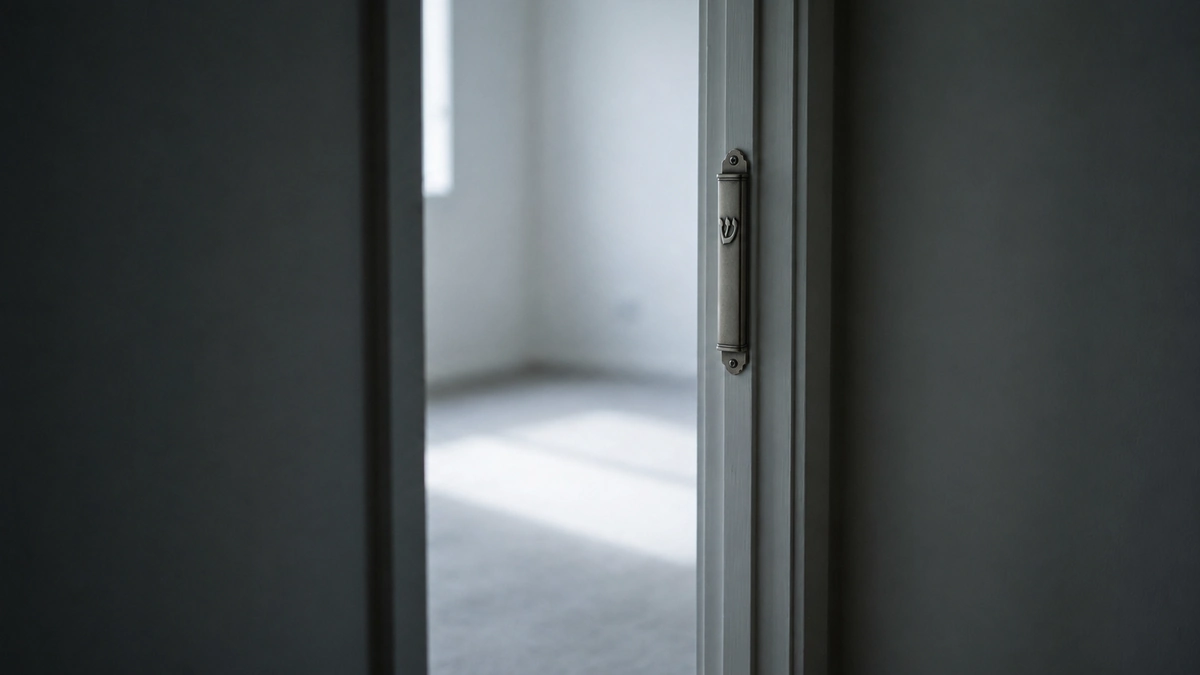
The Zohar on Parashas Va’eschanan explains that the mezuzah is placed at the entrance so that every person who passes through is guarded by Hashem when going out and coming in. On the back of the scroll it is customary to write the Name Shaddai, and the Rema (Yoreh De’ah 288:15) records the custom to make a small ‘window’ in the case so that this Name is visible from the outside. Many mezuzah cases also bear a large letter shin on the exterior as a reminder of this Name. These customs further highlight that the doorway itself is being inscribed as a place of Divine presence; the integrity and kashrus of the scroll inside are what give this visible declaration its halachic and spiritual weight.
Practical Application: Which Spaces Require a Mezuzah
Understanding how the mezuzah shapes Jewish space has direct practical consequences throughout the home. The obligation is not limited to prominent or large rooms. Halachic sources discuss in detail whether small rooms, storage areas, walk-in closets, offices, and other functional spaces require a mezuzah or are exempt. Each doorway that meets the halachic criteria becomes a gateway that defines the area beyond it as a space marked by this mitzvah. Related reading: Mezuzah at the Threshold.
Poskim even discuss a small room situated between two larger rooms; where the halachic criteria are met, a mezuzah is required there as well, though a room that does not contain four amos by four amos is generally exempt (Shulchan Aruch, Yoreh De'ah 286:13). This means that even transitional or utilitarian zones in a home can become part of its network of sanctified Jewish spaces, linked together by the mezuzos on their doorways. Because the details depend on size, usage, and doorway structure, one should consult a rav about complex layouts to ensure that every space that should be shaped by mezuzah in fact is.
The Rambam’s formulation in Hilchos Mezuzah makes clear that the obligation is constant and applies to everyone. Every entrance is an opportunity for renewed awareness. When we walk through a doorway with a kosher mezuzah, we are not just entering a room; we are re-entering a space of obligation and awareness, a home whose identity is continually formed by the presence of Hashem’s words on its doorposts.
If a scroll has deteriorated or become passul (invalid), the home is no longer fulfilling the mitzvah of mezuzah, and the scroll should be repaired or replaced promptly. A missing or invalid mezuzah does not only mean that a technical requirement is lacking; it means that the boundary of the home is no longer properly marked as Jewish space.
Kosher Mezuzah ensures that each mezuzah scroll shaping your home’s sacred space meets the highest halachic standards. Every scroll is OU-endorsed and verified before it reaches your doorpost. The name of the sofer and the magiah who reviewed it are accessible through each scroll's QR code, so you can be confident that the mezuzah defining your home’s Jewish boundaries is genuine and kosher.
For guidance on which script tradition is appropriate for your home — whether Ashkenaz, Sefardi, or Arizal — consulting a rav or reviewing our complete mezuzah buying guide helps ensure that the specific scroll you choose is aligned with your community’s practice and is truly fitting for the role it plays in shaping your home as a Jewish space.
Fulfill the Mitzvah With Confidence — Kosher Mezuzah
Kosher Mezuzah has been dedicated to ensuring the proper fulfillment of the mitzvah of mezuzah for over forty years. Every scroll is written by a vetted sofer who has passed a rigorous halachic examination, double-checked by two expert examiners, and OU-endorsed — so that every doorway you affix carries the full weight of a properly fulfilled mitzvah. Each mezuzah comes with a unique QR code providing complete transparency: the sofer who wrote it, the examiners who reviewed it, the materials used, and when the scroll is next due for inspection. Kosher Mezuzah does not sell secondhand or returned scrolls. Every mezuzah that leaves the warehouse is new, certified, and ready to fulfill the mitzvah properly. To find the right scroll for your home, visit kmezuzah.com/mezuzah-scrolls.
If you have questions about which rooms require a mezuzah, proper placement, or the halachic status of your current scrolls, the Kosher Mezuzah team is available through the contact form at kmezuzah.com/contact.
May the mitzvah of mezuzah bring blessings and protection to your home, and may every doorway stand as a true threshold of sacred awareness.


.svg)
Bring a true Kosher Mezuzah into your home
Fulfill the mitzvah with confidence, beauty, and meaning.
Buy a Mezuzah