
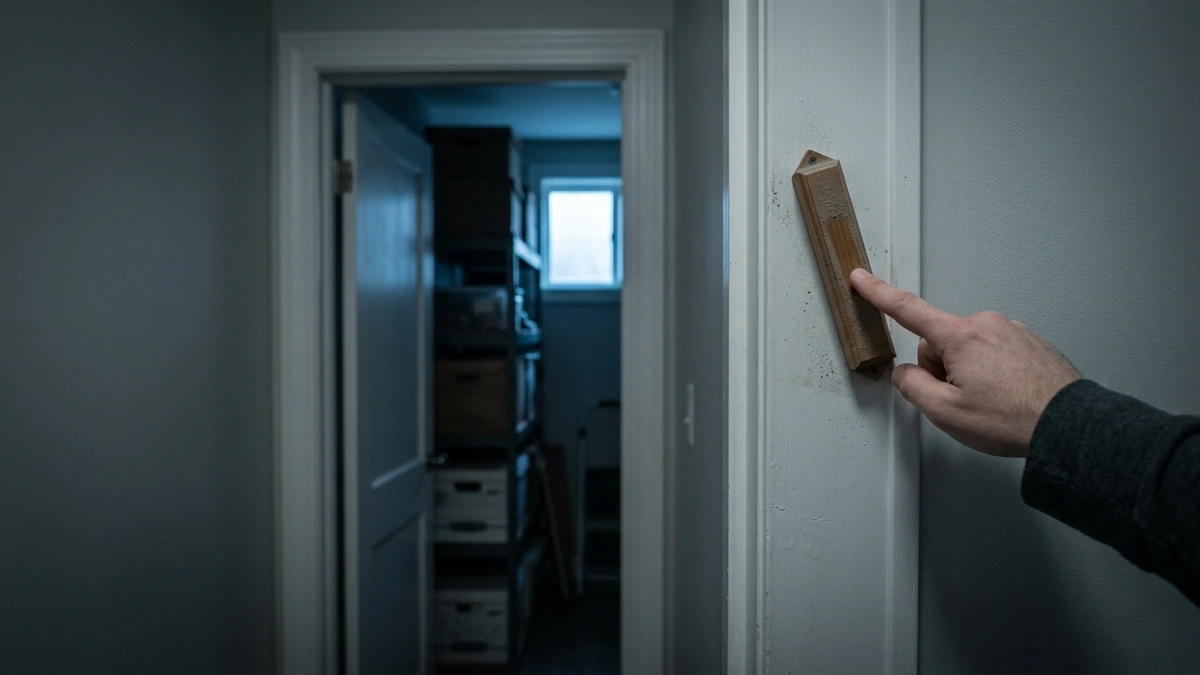
Do Rarely Used Doors Need a Mezuzah? (Storage Rooms, Side Doors, etc.)
Key Takeaways
- A rarely used door mezuzah is still halachically required — the Shulchan Aruch rules that all doorways in a home need a mezuzah regardless of how often they are used
- Infrequent use, blocked access, or heavy furniture in front of a door does not exempt it from the mezuzah obligation according to most halachic authorities
- Only a doorway that has been physically and permanently sealed — nailed shut, plastered over, or structurally altered — may qualify for an exemption
- If a doorway was originally built for regular entry and exit, a later reduction in use does not change its halachic status or remove the obligation
- Storage rooms, side doors, and back entrances that remain structurally open should each have a kosher mezuzah affixed, provided the doorway meets the minimum size requirements
- Mezuzahs on rarely used doors should be checked regularly, as scrolls in seldom-visited rooms can sit unchecked for years and may become pasul without anyone noticing
Frequency of Use Does Not Exempt a Doorway
A rarely used door mezuzah is still a required mezuzah — mezuzah frequency of use is not a halachic factor that determines obligation. The Shulchan Aruch (Yoreh De'ah 286:18) rules explicitly that a house with many doorways requires a mezuzah on every single one, even if the owner does not regularly use all of them. Infrequent use alone is not a halachic exemption. Related reading: Sliding Door Mezuzah.
The Gemara in Menachot (34a) addresses a house with many doors directly: all of them require mezuzahs, even when only one is used regularly. This ruling is brought down by the Rambam, the Tur, and codified in the Shulchan Aruch. The Rema adds one critical qualifier: the obligation applies as long as the doorways were originally made for entry and exit. That phrase — "originally made for entry and exit" — carries enormous practical weight.
What happens when a door falls out of regular use? According to most authorities, the obligation remains. Many contemporary poskim rule that even if heavy furniture is placed in front of a door, a closed storage room entrance, for example, is still obligated because the frame itself remains functional, though some poskim are more lenient when the blockage is clearly intended to be permanent. The mezuzah should stay in place. Only when a doorway has been definitively closed off so that it will no longer be used — nailed shut, plastered over, or structurally sealed — do the poskim consider it exempt. Simply being inconvenient to open is not enough.
There is one genuine exception noted in the sources. If a doorway was originally built not for regular entry but only for a very rare purpose, described in some sources as used only very rarely, certain authorities permit affixing a mezuzah without a blessing, and some authorities exempt such a doorway entirely. This is a narrow exception, not a broad license to skip doorways — and each entrance should still be reviewed carefully.
A separate question arises about a door that was originally used frequently and then fell into disuse. Here the ruling is clear: the reduction in use does not remove the obligation. The halacha looks at the original purpose of the doorway, not its current traffic level. As the poskim state plainly: if it was made for frequent use and use later decreased, the owner is not exempt.
How This Applies in Practice
A storage room mezuzah is still required according to the Shulchan Aruch (Yoreh De'ah 286:1) even when the room is used once a month or once a year, provided it meets the basic size requirements — the doorway must be at least ten tefachim tall (and, according to many poskim, at least four tefachim wide), and the room itself must be at least four amot by four amot. Because the Rambam exempts plain storage rooms that do not serve as dignified living space, many affix the mezuzah on a storage room without a blessing. The fact that you rarely open that door does not change the halachic status of the space or its entrance.
A side door that you never use but that remains structurally open — meaning no furniture is permanently blocking it and it has not been sealed — is also obligated. Even if you have a habit of always entering through the front door, the side entrance retains its status. The Shulchan Aruch is unambiguous on this point.
A back door blocked by heavy furniture sits in a more nuanced zone. The Aruch HaShulchan holds it is still obligated. Some other authorities are more lenient if they feel the blockage is intended to be permanent. The safer and more widely accepted practice is to keep the mezuzah in place unless the doorway has been physically altered.
A permanently sealed door — meaning it has been nailed shut or plastered over with no intention of ever opening it again — is exempt. But according to most poskim, the act of sealing must be definitive and physical, not just an intention or a piece of furniture. Some authorities hold that even a decision not to use a doorway does not exempt it until a physical act is done to the frame itself.
A Common Mistake: Assuming Disuse Means Exempt
The most frequent error is the assumption that because a door "never gets used," it doesn't need a mezuzah. This misunderstanding leads people to leave storage rooms, basement stairwells, and side entrances uncovered for years. In halacha, the doorway's obligation is tied to its construction and its fitness for use, not its usage statistics.
Questions about an infrequently used doorway mezuzah come up often - and the answer is nearly always that the obligation remains. A related mistake involves doorways that were blocked with furniture years ago. Homeowners sometimes assume the problem solved itself — it didn't. Unless the frame was physically altered, the obligation likely remains. It is worth walking through your home carefully, including spaces you rarely enter, to make sure every qualifying doorway is covered.
The concern about a mezuzah becoming pasul over time applies especially to rarely used rooms. A scroll in a storage room or a seldom-visited side entrance can sit for years without anyone noticing that the ink has faded, letters have cracked, or the parchment has been affected by humidity. The obligation does not pause just because the room is quiet — and neither should the checking schedule.
About Kosher Mezuzah
At Kosher Mezuzah, our mission is to help every Jewish home fulfill this mitzvah properly and with full halachic confidence. Every mezuzah scroll we offer is written by a qualified sofer, checked by a trained magiah, and produced under a process endorsed by the Orthodox Union. We provide the name of the sofer, the date of writing, and an image of your scroll, because traceability is not a luxury — it is how the mitzvah is supposed to work.
We also know that a scroll placed on a rarely used doorway is one that may sit unchecked for years. That is why we recommend regular checking of all mezuzahs in your home, including those on storage rooms and side doors. A scroll that has become pasul does not fulfill the mitzvah, even if the case looks fine from the outside. Checking is not a chumra; it is part of the obligation.
If you have questions about which doorways in your home require a mezuzah, or whether a scroll you already have is still kosher, we are here to help. To make sure every doorway in your home is properly covered, browse our mezuzah scrolls here.
Conclusion
A rarely used door mezuzah is obligated in almost every practical case. An unused door mezuzah obligation follows the same rule — if the doorway was built for entry and exit and has not been physically sealed, the mezuzah must remain. The Shulchan Aruch rules that all doorways in a home require mezuzahs regardless of how often they are used, as long as they were originally built for entry and exit. Generally, only a doorway that has been sealed or permanently closed off so it will not be used may be exempt. Blocking a door with furniture does not remove the obligation according to most authorities. If a doorway was once built for regular use, a reduction in use does not change its status. When in doubt, affix a mezuzah — and consult your rav if the situation is unusual.


.svg)
Bring a true Kosher Mezuzah into your home
Fulfill the mitzvah with confidence, beauty, and meaning.
Buy a Mezuzah