
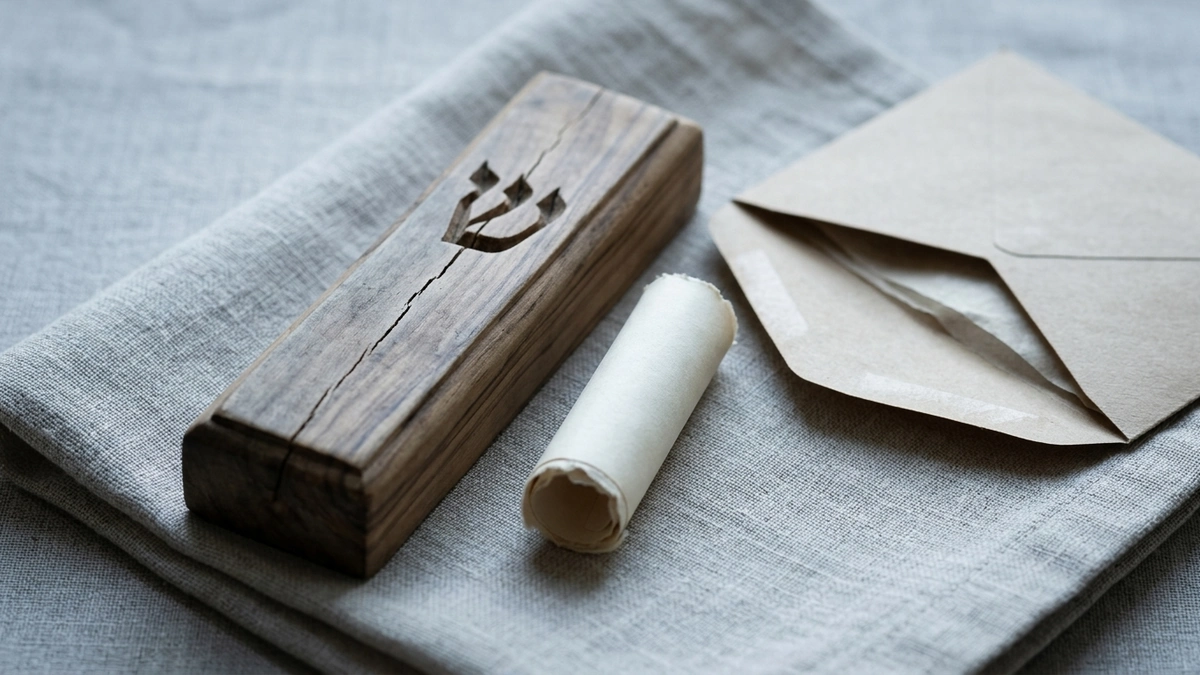

What to Do with an Old or Damaged Mezuzah: A Clear Halachic Guide
A damaged mezuzah raises real and immediate questions. Do you need to replace it right away? Can you simply throw it in the trash? What if it has been on your doorpost for years and the ink has faded? These are not abstract concerns, they touch directly on whether you are currently fulfilling the mitzvah and on the proper respect owed to a sacred object that bears the name of Hashem. This guide will walk you through exactly what halacha requires, from the moment you discover a problem to the final step of proper disposal.
Key Takeaways
- A damaged mezuzah is invalid and fails to fulfill the mitzvah, requiring immediate removal from the doorpost and replacement with a kosher scroll.
- Even when a damaged mezuzah appears visually intact, cracks, faded ink, or separated letters render it pasul and non-functional according to halacha.
- Homeowners must check their mezuzahs twice every seven years (a communal or public mezuzah, such as one in a shul, is checked twice every fifty years), as heat, moisture, and aging naturally deteriorate scrolls in ways that aren't always visible to the naked eye.
- A damaged mezuzah retains its sanctity and must never be discarded in trash; instead, it must be stored respectfully or buried in a geniza, never converted or recycled.
- Have a qualified magiah (halachic examiner) inspect any questionable mezuzah before assuming it remains valid, and replace it with a verified kosher scroll, typically accompanied by a blessing.
- Replacing a worn mezuzah is a meaningful renewal of spiritual commitment, not merely a maintenance task, and fulfilling this obligation carefully merits blessings for the household.
What to Do with an Old or Damaged Mezuzah
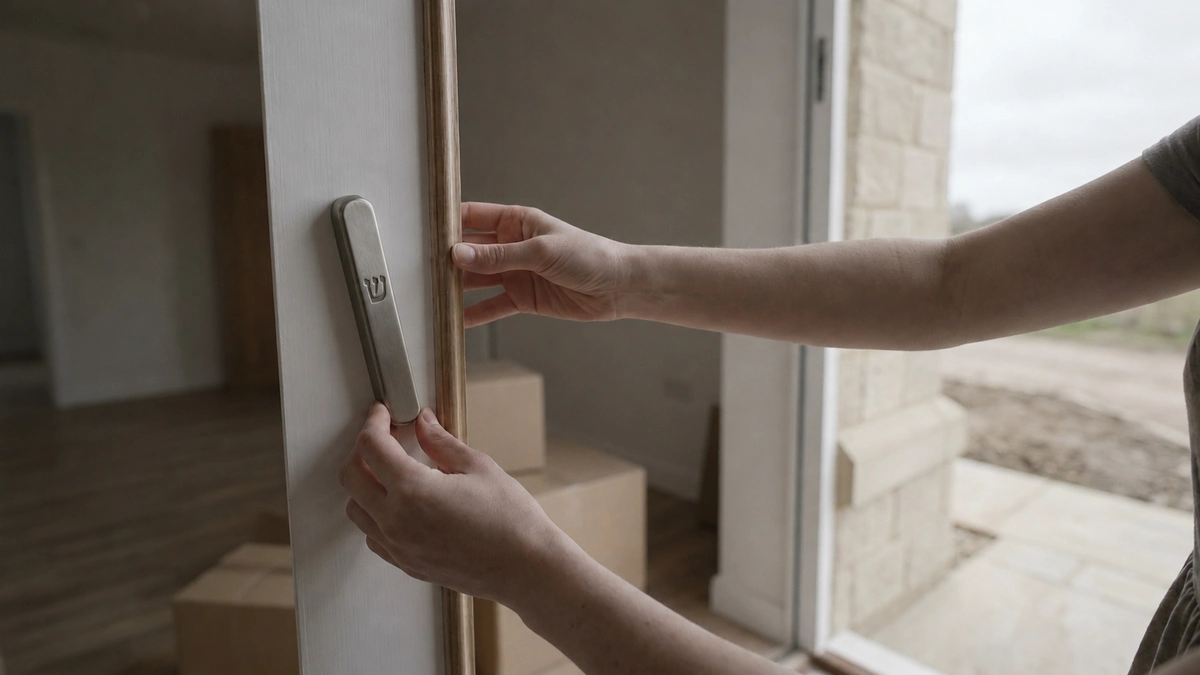
A damaged mezuzah must be removed from the doorpost and replaced as soon as possible. Leaving a pasul (invalid) mezuzah on a doorpost does not fulfill the mitzvah, and in some opinions it may even give the appearance of fulfillment where there is none, which is a more serious concern than simply having no mezuzah at all. If you are unsure whether your mezuzah is damaged, do not wait. Have it checked by a qualified magiah (halachic mezuzah examiner) without delay. Once you have confirmed that a scroll is pasul, the old scroll must be stored with proper respect or buried in a geniza, and a new kosher scroll must be affixed. A bracha is recited in most cases, though poskim differ on whether one is said when simply replacing a scroll on the same doorpost rather than affixing a mezuzah for the first time, so ask your rav if you are unsure. If you have any doubt about the status of your mezuzahs, you are welcome to reach out to us at Kosher Mezuzah for guidance. We cover this in more depth in Can You Reuse an Old Mezuzah Case? What to Check First.
The Halachic Basis: Why a Damaged Scroll Cannot Simply Be Left in Place
The obligation of mezuzah is not fulfilled by placing any written text on a doorpost. The Torah requires a specific, valid scroll, a klaf (parchment) written by a sofer (scribe) with the correct letters, in the correct order, using kosher materials. When any of those conditions break down, the scroll loses its status as a mezuzah and the mitzvah is no longer being performed.
The Shulchan Aruch (Yoreh De'ah 288:5) rules clearly that a scroll whose letters have cracked, faded, or become separated is pasul and must be replaced. The Rambam explains that the text must be complete and legible: even a single letter that is not fully formed or has peeled from the klaf can invalidate the entire scroll. This is because tzurat ha'ot (the form of each letter) is a Torah requirement, not a stringency. A letter that cannot be read as a complete, distinct letter, even if it was once perfectly written, renders the mezuzah pasul.
There is a well-known principle that items of sanctity may not be lowered to a lesser degree of holiness (ma'alin ba-kodesh v'lo moridin). The Shulchan Aruch (Yoreh De'ah 290:1) and the Gemara in Menachot (32a) both state explicitly that worn tefillin may not be converted into a mezuzah precisely for this reason. A mezuzah scroll, which bears Hashem's name, retains its sanctity even after it becomes pasul. This is why disposal cannot be casual, the scroll cannot be thrown in the trash like ordinary paper.
When a scroll becomes pasul on its own over time, through heat, moisture, or the natural aging of ink, the obligation to replace it falls on the homeowner. The Shulchan Aruch (Yoreh De'ah 291:1) requires a person to check his mezuzahs twice in seven years precisely because this kind of gradual deterioration is common and may not be visible to the naked eye.
How to Handle the Situation in Practice
Once you have identified a damaged or worn mezuzah, there are three clear steps to follow. First, remove the pasul scroll from the doorpost carefully. Handle the klaf with respect and avoid touching the text directly with bare hands; the Shulchan Aruch (Orach Chaim 147:1) rules that a Torah scroll should not be held bare-handed without a cloth, and many follow this same care with mezuzah parchment as a matter of proper respect. Second, arrange for a replacement kosher scroll to be affixed as soon as possible, since the doorpost is now missing its mezuzah. Third, store or dispose of the old scroll according to halacha.
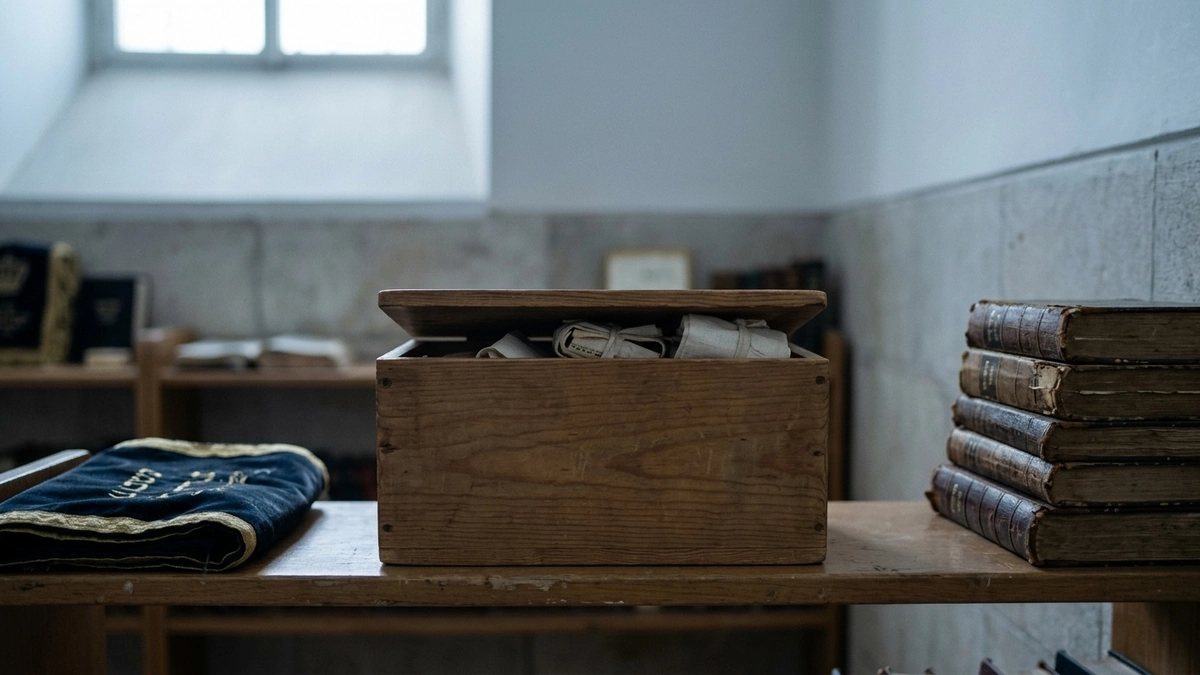
Proper disposal is called geniza. This term refers to the respectful burial or storage of items that contain Hashem's name or sacred Torah text. A pasul mezuzah scroll must be placed in geniza: respectfully buried in the ground (not necessarily in a Jewish cemetery specifically) or brought to a synagogue's geniza collection, where it will eventually be buried. It may not be placed in a recycling bin, burned, or discarded in an ordinary way. Many shuls and Jewish institutions maintain a geniza container for exactly this purpose. Some communities have periodic geniza burials: your local rav or shul can direct you to the nearest facility.
If you are replacing an old mezuzah simply because it has been many years since the last checking, even if the scroll appears fine to the eye, it is still wise to have the scroll examined by a qualified magiah before deciding whether to retain it. A scroll that looks intact from the outside may have cracked letters or faded ink that are only visible under proper light and magnification. This is one of the common mistakes buyers make: assuming that a visually clean scroll is necessarily a kosher one.
If you are unsure how to proceed with a specific scroll or have a more complex situation, for example, a mezuzah that was found behind a wall during renovation, or one that was damaged by water, please contact Kosher Mezuzah and we will help you find the right path forward.
Common Mistakes to Avoid
One of the most frequent errors we see is homeowners assuming that an old mezuzah is still valid simply because it has been in place for a long time. In truth, the opposite is often the case. Heat, direct sunlight, and moisture can all cause a mezuzah to become pasul over time, even if it was once of excellent quality. A mezuzah that is twenty or thirty years old, or one that has been exposed to outdoor conditions, almost certainly requires checking.
Another common error is treating the old scroll as ordinary paper once it has been declared pasul. Even a pasul mezuzah retains its kedusha (sanctity) because it contains Hashem's name. It must be handled respectfully and placed in geniza. This is not a chumra (stringency), it is the basic halacha.
A third mistake is waiting to replace the scroll because of cost or inconvenience. The mitzvah of mezuzah is an ongoing obligation. A doorpost without a valid mezuzah, even temporarily, means the mitzvah is not being fulfilled. Understanding what makes a scroll spiritually and halachically valid makes it easier to approach this obligation with the proper seriousness.
The Deeper Meaning Behind Replacing a Worn Scroll
There is something genuinely meaningful in the act of replacing an old mezuzah. The Shulchan Aruch (Yoreh De'ah 285:1) tells us that one who is careful with the mitzvah of mezuzah merits long life for himself and his children. The mezuzah is not a one-time installation, it is a living commitment, one that requires ongoing attention and care. Replacing a worn scroll is not merely a maintenance task. It is a renewal of our awareness that Hashem's presence guards our home, and that this awareness carries real responsibilities.
Prominent halachic authorities note that many people, even learned ones, are not careful enough about the ongoing status of their mezuzahs. They urge homeowners to involve qualified experts rather than relying on their own assessment. This advice is as relevant today as it was when it was written. The quality and halachic standards of a mezuzah matter not only at the time of purchase but throughout the life of the scroll.
Key Takeaway
A damaged mezuzah is pasul and does not fulfill the mitzvah. It must be removed from the doorpost, replaced with a valid kosher scroll, and disposed of through geniza, never in an ordinary trash receptacle. The obligation to check mezuzahs regularly exists precisely because scrolls deteriorate over time in ways that are not always visible. Do not assume a scroll is valid simply because it looks intact or has been in place for years. When in doubt, consult a qualified magiah or your local rav.
Fulfilling the Mitzvah with Confidence: A Note About Kosher Mezuzah
At Kosher Mezuzah, every scroll we offer is written by a vetted sofer (scribe) and checked by a qualified magiah (halachic examiner) whose name is documented. Our process is overseen by the Orthodox Union (OU), providing an additional layer of accountability that goes beyond standard certification. We believe that knowing who wrote your scroll and who checked it, and being able to verify that information, is not a luxury. It is what responsible fulfillment of this mitzvah looks like.
If you have a scroll that needs checking, or if you are ready to replace a worn or damaged mezuzah with one you can trust, we are here to assist. We also encourage you to consult your own rav with any halachic questions specific to your situation, especially about borderline cases or unusual circumstances. Our role is to make the practical side of this mitzvah as clear and reliable as possible.
If you have questions about a damaged mezuzah or need help arranging a replacement, please reach out to us. May your home be a place of kedusha (holiness), and may the zechus (merit) of this mitzvah bring bracha and shalom to all who dwell within it.


.svg)
Bring a true Kosher Mezuzah into your home
Fulfill the mitzvah with confidence, beauty, and meaning.
Buy a Mezuzah